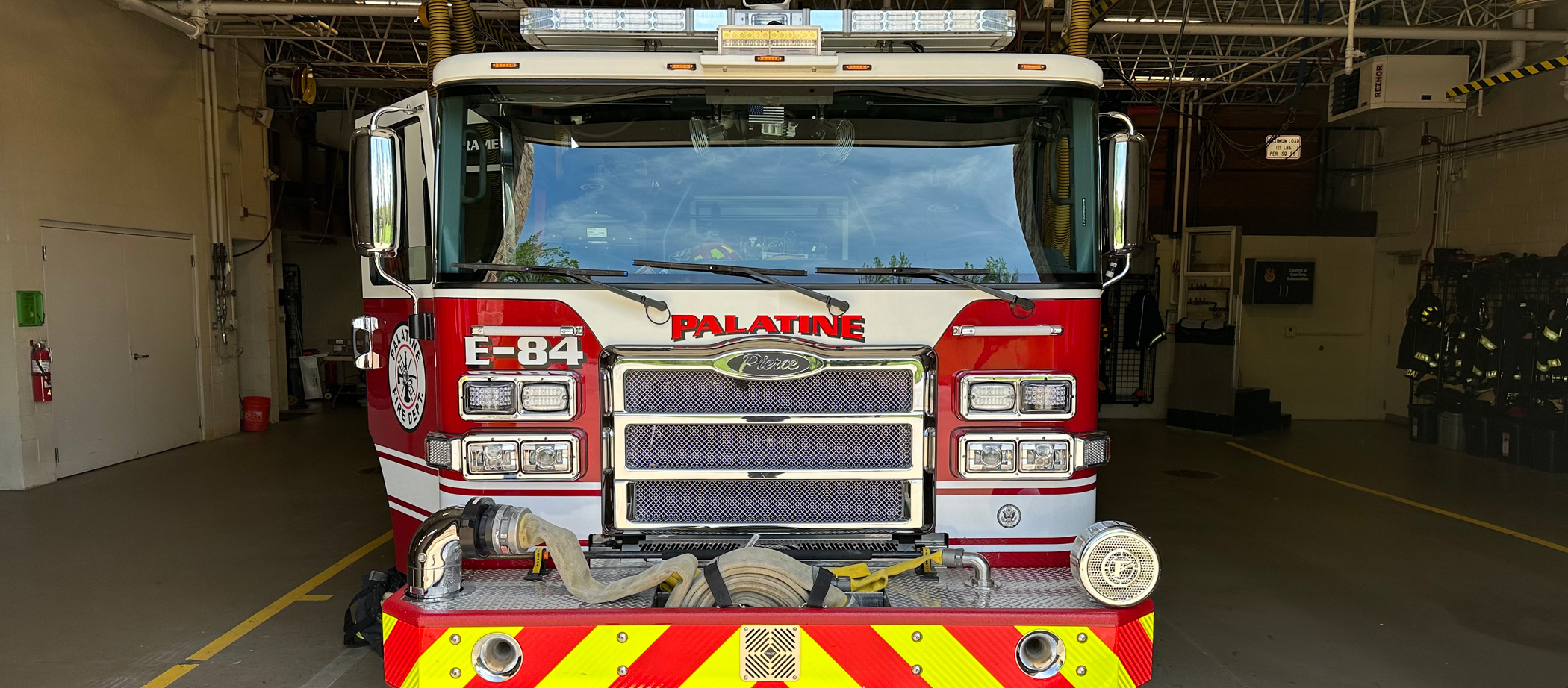
You can be a firefighter, protecting lives, leading teams, and advancing fire safety,
through Harper’s Fire Science Technology program.
At Harper, you’ll study fire behavior, prevention, hazardous materials, and firefighting
strategy while gaining hands-on experience through simulations and field training
guided by seasoned fire professionals.
With an AAS degree or certificate, you’ll be prepared to begin or advance your career
in fire service, whether as a firefighter, fire inspector, investigator, or officer,
with opportunities for promotion and specialization across departments and industries.
Program highlights
Train in Harper’s new Emergency Services Training Center, a state-of-the-art facility offering realistic fire simulations, hands-on tower exercises,
and classroom-based prep to equip aspiring and active first responders with the skills
and certifications they need to serve and protect.
The two-year Associate in Applied Science in Fire Science Technology degree program prepares you to launch directly into a career as a firefighter, fire
inspector, or forest fire inspector.
Gain the foundational knowledge and real-world training to launch your fire service
career through coursework in fire protection systems, strategy and tactics, leadership,
and building construction. You'll learn to analyze emergencies, manage incident response,
and explore the full scope of fire service careers, all while preparing to lead with
confidence in high-stakes environments.
Want to build upon your fire science technology coursework? Harper College prepares
you to transfer to a four-year college or university to continue your fire safety
studies. To learn more, visit Transfer Information or see your advisor.
Basic Operations Firefighter: Launch your fire service career with a certificate
Harper College’s Basic Operations Firefighter (BOF) Certification prepares students for entry-level firefighter operations through structured, hands-on
training aligned with the Office of the Illinois State Fire Marshal (OSFM) and the
National Fire Protection Association (NFPA) 1010: Standard on Professional Qualifications
for Firefighters.
This limited-enrollment academy integrates classroom instruction, firefighter skill
development, hazardous materials operations training, and live fire evolutions conducted
at the Emergency Services Training Center.
Learn more about a career in fire science on our Program Highlights page.
Complete your bachelor's degree on Harper's campus
Through theUniversity Center at Harper College, you can build on your AAS in Fire Science by earning a Bachelor of Science in Public
Safety Management from Southern Illinois University right here at Harper. SIU brings
its faculty and courses directly to Harper so you can complete your studies without
missing a beat.Learn more about the SIU public safety management degree.
Explore careers in Fire Science Technology
Learn more about career outcomes for Harper's Fire Science Technology degree programs.
Each career profile offers a complete picture of the local job market, including salaries,
open positions, top local employers, and more. To learn more, visit Fire Science Technology Careers.
Firefighters
Firefighters
* Data sampled April 2025. Visit the Firefighters career profile for most current data.
$85,506 Median Salary
-0.1% Projected Job Growth (2025-2032)
35 Job Postings
Description:
Control and extinguish fires or respond to emergency situations where life, property,
or the environment is at risk. Duties may include fire prevention, emergency medical
service, hazardous material response, search and rescue, and disaster assistance.
Core tasks:
Rescue survivors from burning buildings, accident sites, and water hazards.
Dress with equipment such as fire-resistant clothing and breathing apparatus.
Assess fires and situations and report conditions to superiors to receive instructions,
using two-way radios.
Move toward the source of a fire, using knowledge of types of fires, construction
design, building materials, and physical layout of properties.
Inspect buildings to detect fire hazards and enforce local ordinances and state laws,
or investigate and gather facts to determine cause of fires and explosions.
Core tasks:
Prepare and maintain reports of investigation results, and records of convicted arsonists
and arson suspects.
Testify in court cases involving fires, suspected arson, and false alarms.
Package collected pieces of evidence in securely closed containers, such as bags,
crates, or boxes, to protect them.
Conduct inspections and acceptance testing of newly installed fire protection systems.
Quick facts:
First-Line Supervisors of Firefighting and Prevention Workers
First-Line Supervisors of Firefighting and Prevention Workers
Directly supervise and coordinate activities of workers engaged in firefighting and
fire prevention and control.
Core tasks:
Assign firefighters to jobs at strategic locations to facilitate rescue of persons
and maximize application of extinguishing agents.
Provide emergency medical services as required, and perform light to heavy rescue
functions at emergencies.
Assess nature and extent of fire, condition of building, danger to adjacent buildings,
and water supply status to determine crew or company requirements.
Communicate fire details to superiors, subordinates, or interagency dispatch centers,
using two-way radios.
Enforce fire regulations, inspect forest for fire hazards, and recommend forest fire
prevention or control measures. May report forest fires and weather conditions.
Core tasks:
Relay messages about emergencies, accidents, locations of crew and personnel, and
fire hazard conditions.
Estimate sizes and characteristics of fires, and report findings to base camps by
radio or telephone.
Conduct wildland firefighting training.
Direct crews working on firelines during forest fires.
Quick facts:
For more information about Harper's Fire Science Technology program, please contact
Admissions Outreach at 847.925.6700.