
Harper College will be closed on Monday, September 7, in observance of Labor Day.
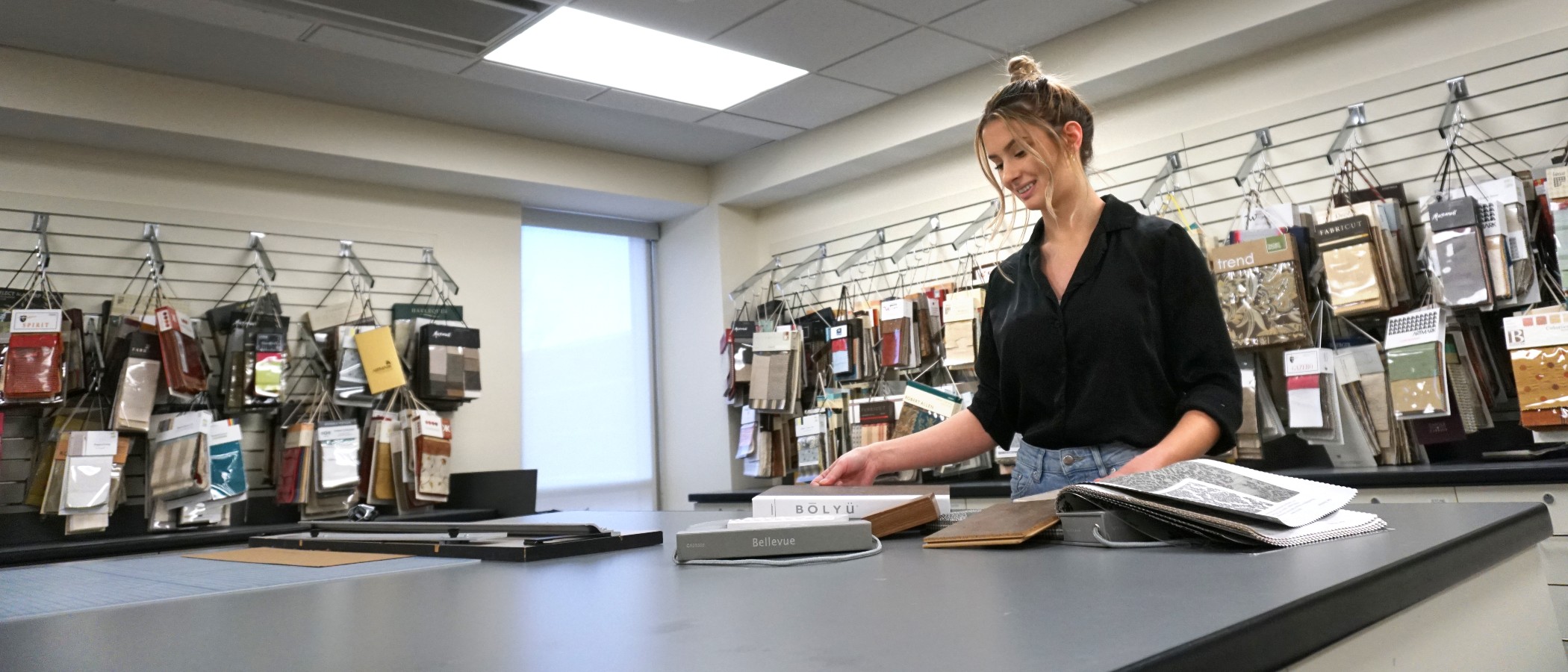
Every room you walk into tells a story — about style, comfort, purpose, and personality. With a career in interior design, you have the power to shape the way people live, work, and feel in the spaces around them.
At Harper, you’ll study space planning, color theory, furniture selection, materials, and finishes, as well as drafting, visual communication, and presentation techniques. Through hands-on projects and collaboration, you’ll learn to balance creativity with technical skill, using tools like CAD software and industry-standard design methods.
You’ll be prepared to transfer to a design program at a four-year university or enter the field equipped with practical experience, portfolio-ready projects, and a working knowledge of ADA compliance, safety codes, and collaboration with architects and contractors — giving you a strong start to create spaces that are both beautiful and functional.

Harper's two-year Associate in Applied Science in Interior Design (AAS) offers the training you need to become a professional interior designer. With courses in interior design studio, history of furniture and interior architecture, materials and sources, interior detail/construction drawing, environmental design, kitchen design studio and more. You’ll be prepared for a career in the furnishing and design industries.
To make transferring to a bachelor's program in fashion studies as easy as possible, Harper College has developed transfer agreements with area universities. To learn more, visit our Transfer Information page or see your advisor.

Harper's interior design and architecture certificate programs are designed to give you an introduction to the furnishing and design industries or to learn new skills. Many of the courses you take for these certificate programs can also be applied to the Interior Design AAS degree.
Learn more about career outcomes for Harper's interior design degree and certificate programs. Each career profile offers a complete picture of the local job market, including salaries, open positions, top local employers and more. To learn more, visit Interior Design Careers.
For more information about starting your interior design degree at Harper, please contact Admissions Outreach at 847.925.6700.